Importance of Classroom Desk Dimensions
Choosing the right desk is one of the most important decisions a school can make when planning a classroom. Classroom desk dimensions influence far more than how the room looks. They affect comfort, posture, concentration, lesson flow and the overall learning environment. A desk that is too high, too deep or too wide for the space can make even a well-organised classroom feel awkward. A desk that is properly sized helps the room function more smoothly and supports pupils throughout the school day.
This matters because classrooms are expected to support a wide range of activities. Some are designed for focused independent work, while others need to shift quickly between paired discussion, group tasks and practical learning. The dimensions of the desks in the room play a major role in how easily that can happen. If the sizing is wrong, movement becomes more difficult, pupils may feel cramped and teachers can struggle to make the best use of the space. If the sizing is right, the classroom feels calmer, more efficient and easier to manage.
Good classroom desk dimensions are not just a technical consideration. They are part of creating a room that works well for both teaching and learning.
Comfort starts with fit. If a desk is too high, pupils may lift their shoulders or strain their arms while writing. If it is too low, they may slump forward, which quickly becomes uncomfortable over longer periods of work. Over time, poor desk sizing can contribute to bad posture, physical discomfort and reduced concentration.
This is where thoughtful sizing and ergonomic desk design become especially important. A well-sized desk allows pupils to sit more naturally, with their arms at a comfortable level and enough surface space for books, pens and devices without feeling restricted. In classrooms where pupils spend large parts of the day reading, writing or using screens, that makes a noticeable difference.
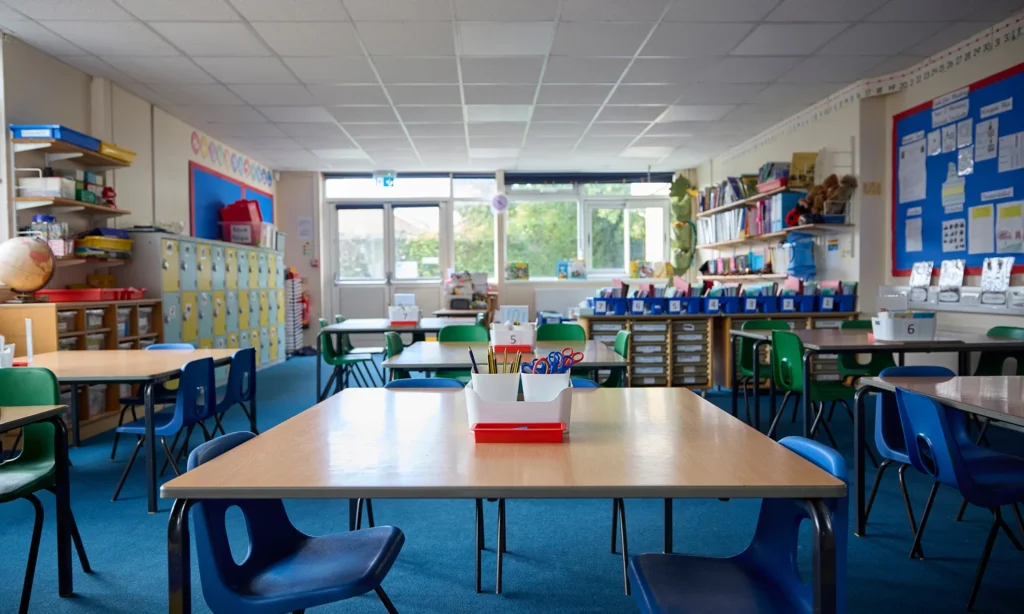
The right classroom desk dimensions also shape the wider learning environment. They affect how easily pupils can enter and leave their seats, how the room is arranged, and whether the space feels open or overcrowded. Oversized desks can reduce circulation space and make classrooms feel cramped, while desks that are too small may not support the practical demands of modern teaching.
When desk sizing is well judged, the room feels more balanced. Teachers can maintain clearer sightlines, pupils can move around more safely and the overall layout becomes easier to manage. In that sense, desk dimensions are not just about furniture. They are part of the way the classroom works every day.
Standard Classroom Desk Dimensions and Guidelines
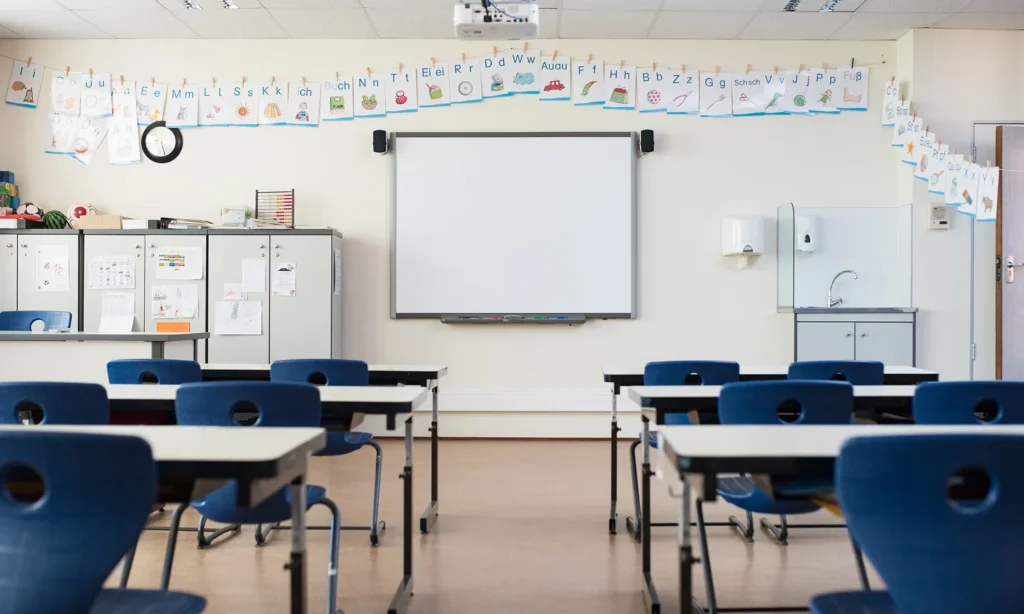
There is no single desk size that works for every pupil or every learning space. Standard classroom desk dimensions need to reflect the age of the pupils, the type of classroom activity and the size of the room itself. In UK schools, sizing is commonly linked to BS EN 1729 and the international Sizemark system, which helps schools match desks and chairs to pupil stature more accurately.
Standardisation matters because it provides a practical starting point. Without consistent sizing guidance, schools are more likely to choose desks that look suitable but do not actually fit the pupils using them. Standard measurements help schools make better decisions, especially when buying furniture for several year groups or multiple classrooms.
For most mainstream settings, the most common desk heights are linked to the following Sizemarks:
- Sizemark 2 – 530mm desk height
- Sizemark 3 – 590mm desk height
- Sizemark 4 – 640mm desk height
- Sizemark 5 – 710mm desk height
- Sizemark 6 – 760mm desk height
These sizes are used across primary and secondary education, depending on the age and stature of the pupils. The key point is that desk height should always be considered alongside chair height so that pupils can work comfortably and maintain better posture.
Width and depth matter just as much. In many classrooms, single pupil desks are often around 600mm to 700mm wide and 450mm to 600mm deep, although this varies depending on the design. Larger desks and classroom tables used for paired or grouped work may go beyond this. The best standard classroom desk dimensions are the ones that provide enough workspace without overwhelming the room.
Primary School Desk Sizes
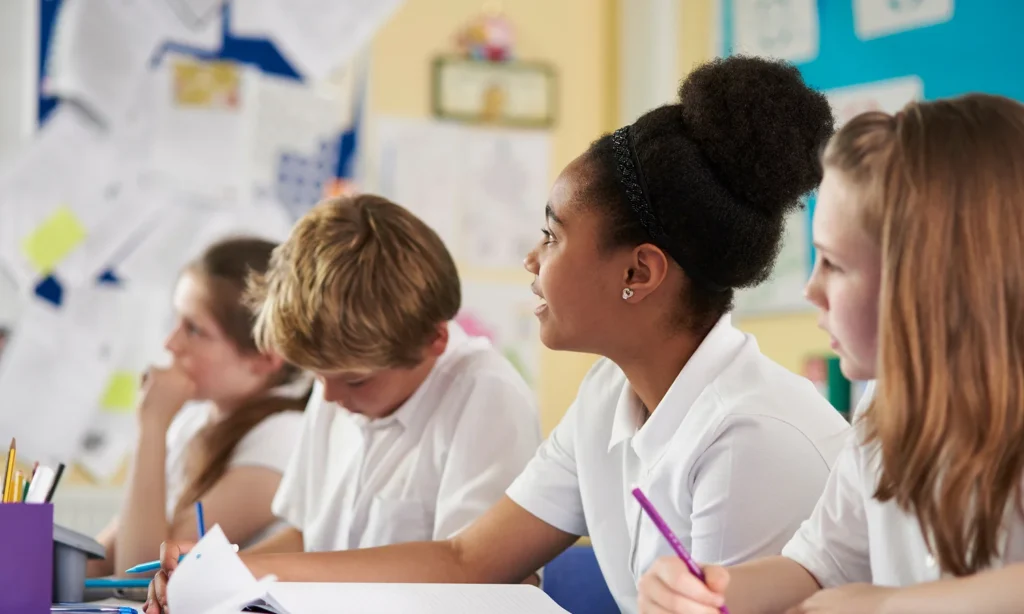
Desk size is especially important in primary schools because younger pupils are still developing posture, coordination and classroom habits. Furniture should support them physically while also fitting comfortably into a more flexible classroom environment.
For most primary settings, the most relevant desk heights are:
- Sizemark 1 – 460mm desk height
- Sizemark 2 – 530mm desk height
- Sizemark 3 – 590mm desk height
- Sizemark 4 – 640mm desk height
Reception and KS1 pupils are more likely to need the lower sizes, while older KS2 pupils often move into Sizes 3 or 4. The correct desk height allows children to sit with their feet supported, their arms comfortably positioned and their bodies in a more natural working posture.
Primary classrooms also have unique layout demands. Children move regularly between carpet time, practical tasks, group work and table-based learning, so desks need to support flexibility as well as comfort. This means schools often need to think carefully about classroom desk layout dimensions in addition to individual desk size.
A desk may be the right height for the child but still be the wrong choice if it takes up too much floor space or makes movement around the room more difficult.
Secondary School Desk Sizes
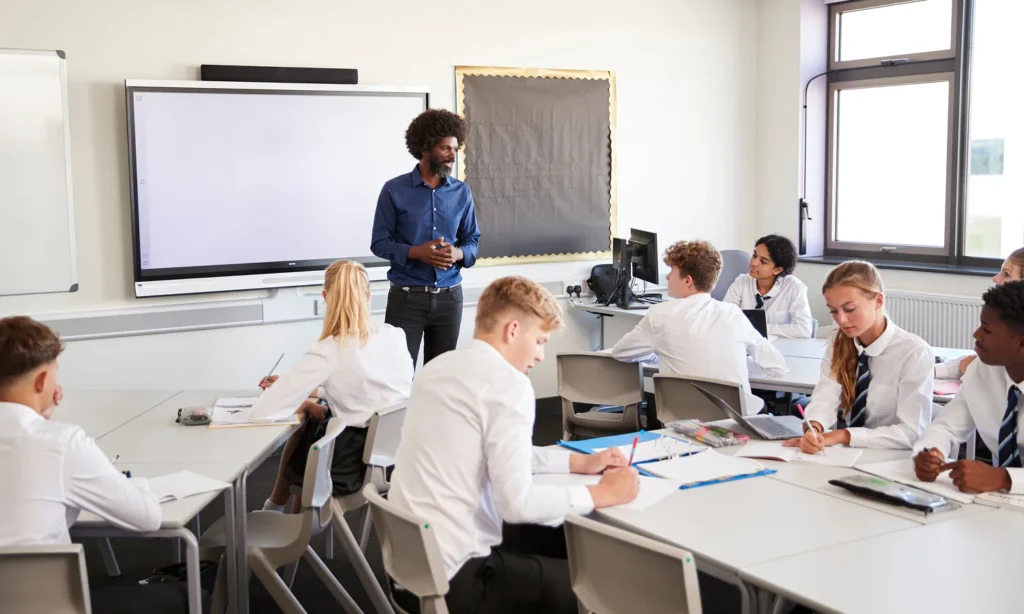
Secondary classrooms usually place greater demands on desks because students are older, larger and more likely to spend longer periods working at them. Written work, textbook use, revision and digital learning all require desks that feel appropriately sized and stable.
For most secondary pupils, the most common desk heights are:
- Sizemark 4 – 640mm desk height
- Sizemark 5 – 710mm desk height
- Sizemark 6 – 760mm desk height
As with all school furniture, the right choice should be based on the pupils using the room rather than year group alone. A desk that is too small can quickly become uncomfortable for older students, particularly during long writing tasks or lessons that require sustained concentration.
Secondary schools also need to think about subject-specific needs. A classroom used mainly for independent written work may suit a very different desk from one used for technology, collaborative tasks or practical learning.
That is why classroom desk dimensions should always be considered in the context of how the room is actually used. Take the MPD for example – available in nearly endless size and colour combinations, as well as custom variations if needed.
Strategic Classroom Desk Layout Dimensions
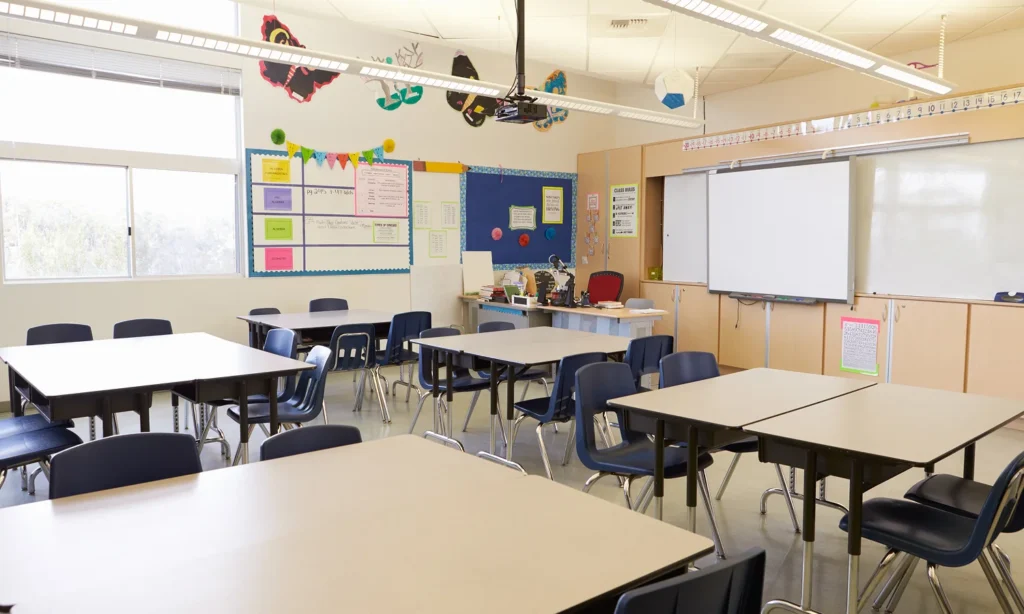
Desk size matters, but layout matters just as much. Classroom desk layout dimensions affect how well the space functions, how easily pupils and teachers can move through it, and how different teaching styles are supported.
A good classroom layout creates flow. It leaves enough room for pupils to sit comfortably, enough space for chairs to move in and out, and enough circulation area for teachers to move around the room without constantly weaving between cramped furniture. Poor layouts can make classrooms feel crowded and disruptive, even when the desks themselves are well made.
This is where desk seating arrangements become important. Rows may work well in classrooms focused on independent work and direct teaching. Grouped desks can support collaboration and discussion. U-shaped or semi-open layouts may be useful in some settings where visibility and communication are priorities. The best arrangement depends on the age group, subject and teaching style, but every arrangement relies on practical spacing.
A fantastic example of a product that is used in flexible, collaborative learning environments is the Compass – a 3 part table that provides endless arrangements to foster creative learning. Another popular product that we get great feedback from is the Millenium 90˚Quadrant which is the perfect solution for group discussion or presentations.
Different types of desks can also affect layout options. Rectangular desks tend to be the easiest to organise in rows or pairs, while more flexible shapes can support group learning but require more thought around spacing. Schools that want adaptable rooms often benefit from desks that can be reconfigured without making the room feel cluttered.

Choosing the Right Classroom Desk
Choosing the right desk is about more than finding a size chart and placing an order. Schools need to think about the relationship between pupil age, room size, layout and subject requirements. A desk that works well in one classroom may be a poor fit in another.
Space is one of the biggest considerations. Even the best desk can become the wrong choice if too many are placed in a small room. Schools should think carefully about walkways, storage access, sightlines and the space needed for chairs to move freely. This is especially important when planning desk seating arrangements for larger classes or smaller rooms.
Age is another key factor. Younger pupils often need more compact furniture that supports movement and flexibility, while older pupils may require larger work surfaces for books, folders and devices. Subject requirements matter too. A classroom used for general learning may need very different furniture from one used for ICT, art or practical subjects.
Good classroom desk dimensions should therefore support both the pupil and the room. They should make learning more comfortable while also helping the space work efficiently.
Need help finding the right desk for your classroom?
Finding the right desk is not just about measurements on paper. It is about choosing furniture that fits the pupils, the subject and the space. When classroom desk dimensions are carefully considered, schools can create rooms that feel more comfortable, more organised and more supportive of learning.
If you are reviewing your classroom furniture, it is worth taking the time to think about standard classroom desk dimensions, ergonomic desk design, practical desk seating arrangements and the wider classroom desk layout dimensions of the room. Those details have a real impact on how well the classroom works every day.
Speak to our sales team today, who can help you find the perfect desk solution for your pupils. Simply head to our Contact Us page to get in touch.
The Sizemark system, aligned with BS EN 1729 in the UK, helps match desk and chair dimensions to pupil stature so students sit comfortably and maintain good posture.
Common desk heights are:
Sizemark 1 — 460mm (typically early primary)
Sizemark 2 — 530mm
Sizemark 3 — 590mm
Sizemark 4 — 640mm
Sizemark 5 — 710mm
Sizemark 6 — 760mm
Choose based on the pupils actually using the room rather than year group alone, and always consider desk height alongside the correct chair height to support natural arm position and feet placement.
Correct dimensions directly affect comfort, posture, concentration, and how smoothly lessons run. Desks that are too high can make pupils lift their shoulders and strain arms; too low and they slump forward, both reduce comfort and focus. Well-sized desks support natural sitting posture and provide enough surface for books and devices. They also influence the wider environment: right-sized desks improve sightlines, circulation, and the ease of entering/exiting seats, helping classrooms feel calmer, safer, and easier to manage.
Single-pupil desks are commonly about 600–700mm wide and 450–600mm deep, though designs vary. Larger desks or tables suit paired or group work. The best choice provides enough workspace without overwhelming the room, aim for surfaces that hold books, pens, and devices comfortably while preserving circulation space so chairs can move in and out and walkways stay clear.
Primary pupils benefit from smaller, flexible furniture that supports developing posture and varied activities. Typical desk heights are Sizemark 1–4 (460–640mm), with Reception/KS1 tending lower and older KS2 moving to Sizes 3–4. Classrooms also need layouts that accommodate frequent transitions between carpet time, practical tasks, groups, and tables. Secondary students are larger and spend longer at desks, so Sizemarks 4–6 (640–760mm) are most common. Choices should reflect pupil stature and subject demands, independent written work, technology, or practical learning may require different desk sizes and stability.
Prioritise flow: allow space for pupils to sit and move chairs, keep clear walkways for teachers, and maintain good sightlines. Match arrangements to teaching style, rows for direct instruction and independent work, grouped clusters for collaboration, and U-shaped or semi-open layouts for visibility and discussion. Rectangular desks are easy to organise in rows or pairs; more flexible shapes support group learning but need careful spacing to avoid clutter. If you need adaptable setups, consider reconfigurable options (for example, ranges like MPD, or collaborative tables such as Compass and the Millenium 90˚Quadrant), and if in doubt, speak to the sales team for tailored guidance.
 Visit Nortek Industrial
 Visit Mirplay School