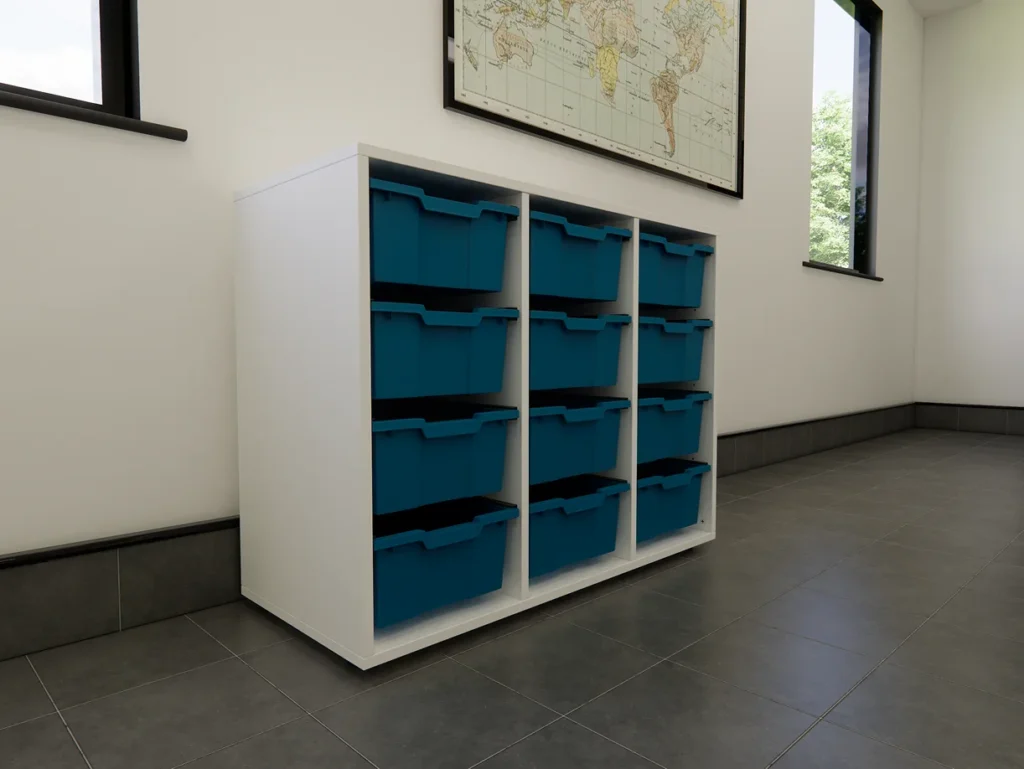
Yet storage is often the last thing planned when a classroom is set up, which is how schools end up with mismatched units that don’t quite fit the space or the age group using it. This guide walks through practical classroom storage ideas that hold up in real schools, common mistakes worth avoiding, and what to look for when you’re ready to buy.
Why classroom storage matters
Well-planned classroom storage reduces clutter, speeds up transitions between activities, and gives pupils the confidence to find and return their own resources. It also plays a direct role in classroom safety and behaviour, since a disorganised room creates more opportunities for trips, distraction and lost equipment.
Beyond tidiness, storage affects how a lesson actually runs. When materials have a clear, consistent home, teachers spend less time searching for resources and more time teaching, and pupils build independence by managing their own belongings rather than relying on an adult for every request. Good storage also protects the resources themselves. Books, equipment and materials kept in proper units last longer than those left loose on shelves or in overstuffed boxes, which matters when budgets are tight and replacement costs add up over a school year.
Classroom storage ideas that work in practice
The best classroom storage ideas are the ones matched to how a specific room is actually used, rather than a generic solution applied across every classroom in a school. The following ideas cover the storage types that consistently work well in UK primary and secondary settings.
Tray storage for everyday organisation
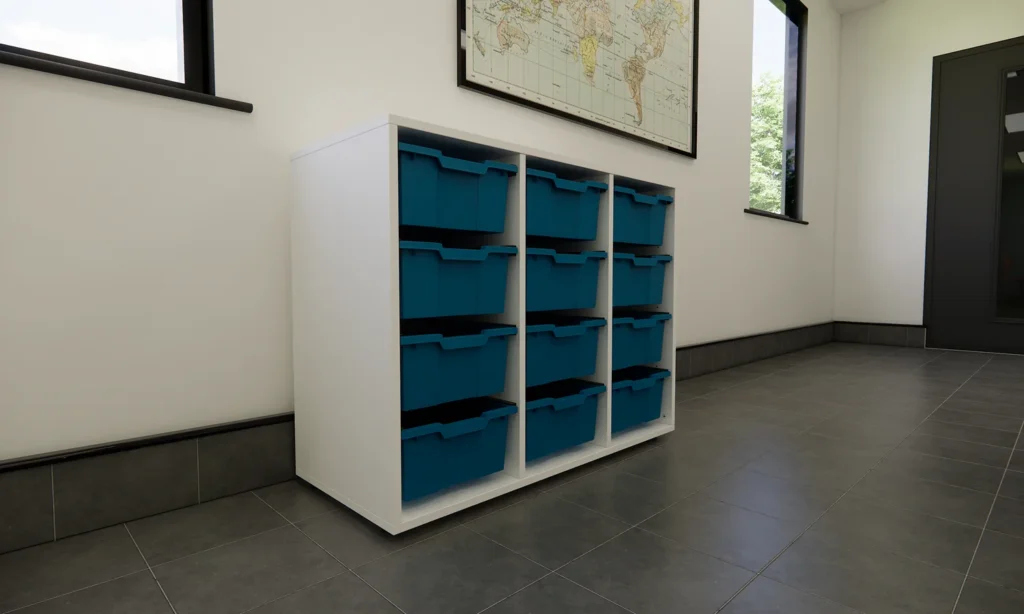
Tray storage remains one of the most effective classroom storage solutions, particularly in primary and early years settings. Each pupil, group or subject gets its own dedicated space, and because units are open fronted, contents stay visible and easy to check at a glance.
Trays can be colour coded or labelled with words and pictures, which helps younger pupils recognise their own space without needing to read. Damaged trays are also simple to replace individually rather than needing to swap out a whole unit. Browse our classroom storage range for tray units in a range of configurations and sizes.

Open shelving for shared resources
Open shelving works well for resources that the whole class needs to access, such as reading books, games or shared equipment. Because everything is visible, pupils can choose and return items without relying on a teacher to fetch things for them.
Using baskets or clear tubs on open shelving keeps things tidy and stops the shelf becoming a dumping ground for loose items. This approach works particularly well for reading corners and shared resource areas in primary classrooms, where encouraging independent choice is part of the point.

Mobile trolleys for flexible teaching
Mobile storage trolleys let resources move with the lesson rather than staying fixed in one spot. That’s useful for group work, interventions, and any teaching style that shifts between whole-class instruction and smaller activities.
Lockable castors mean a trolley can be wheeled into position and then held firmly in place during a lesson, so mobility doesn’t come at the cost of stability. Our multi-purpose trolleys cover art supplies, shared equipment and general classroom resources that need to travel between rooms.

Lockable cupboards for secure storage
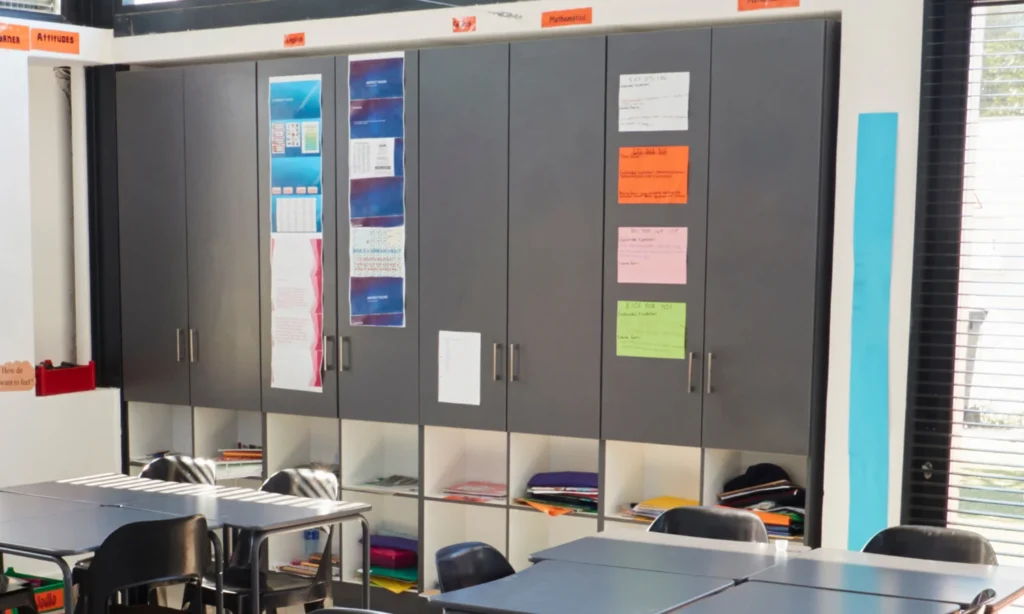
Some items simply shouldn’t be freely accessible: confidential pupil records, staff belongings, assessment materials, or supplies that need controlling for safety reasons. Lockable cupboards solve this without creating a visual mess in the classroom.
Tall cupboards are a good option in smaller classrooms since they make use of vertical space that would otherwise go unused. Our classroom storage buying guide covers the full range of cupboard configurations, including which settings genuinely need a lockable option.
Personal storage and cubbyholes
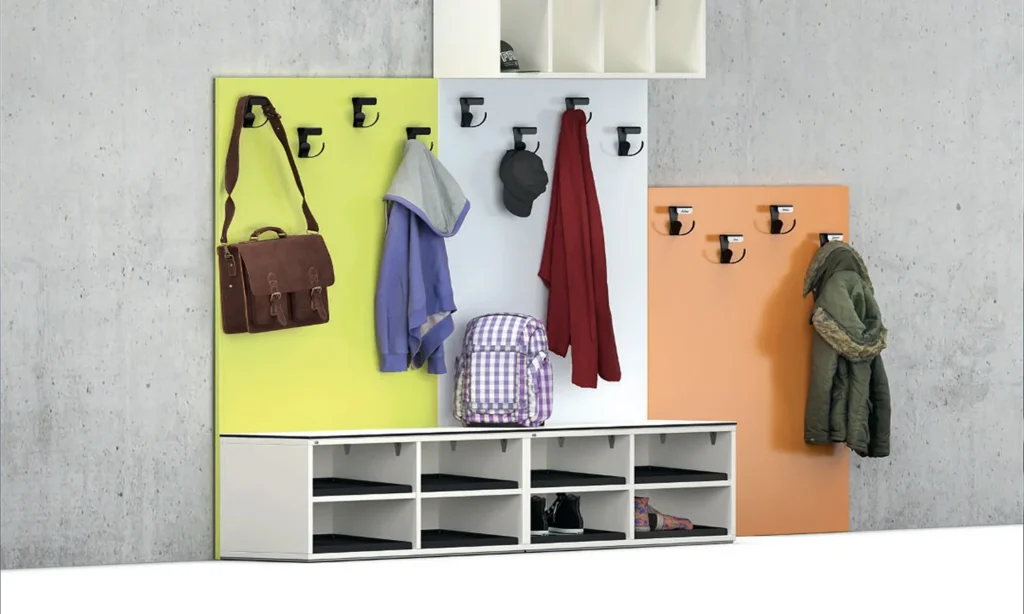
Giving each pupil their own dedicated space, whether that’s a cubby, a peg or an assigned tray, cuts down on lost property and the daily scramble for missing belongings.
This kind of personal storage also builds routine and responsibility, since pupils learn to manage their own coats, bags and PE kits without prompting. Labelling with names and symbols makes the system work even for pupils who aren’t yet reading fluently.

Storage that supports SEN and inclusive classrooms
In SEN and inclusive settings, storage should reduce the effort needed to find and put away resources, not add to it. That generally means fewer, well-organised units rather than lots of small ones scattered around the room.
Practical considerations include low-level storage that’s reachable from a wheelchair or by younger pupils, clear or lightly coloured trays so contents are easy to identify, and consistent visual labelling using pictures alongside words. These are physical, furniture-level adjustments rather than teaching decisions, and our special needs furniture range is designed around exactly this kind of accessibility.
Smart storage for small or multi-use classrooms
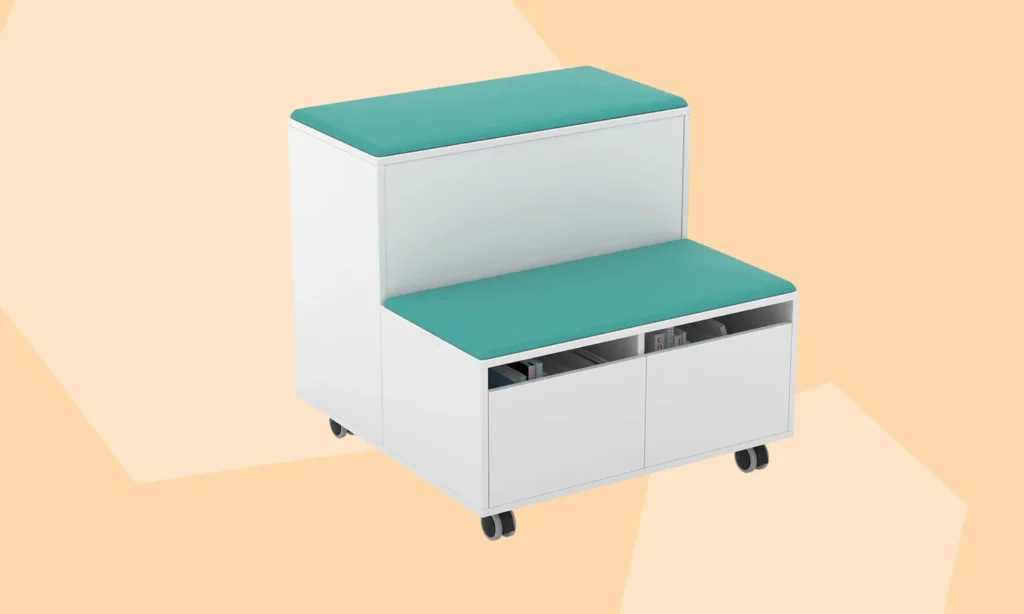
Limited floor space doesn’t have to mean limited storage. Vertical shelving, stackable units and mobile storage all make use of space that a single large fixed unit would otherwise waste.
Thinking upwards and mobile, rather than simply adding more floor-standing furniture, tends to work better in classrooms that double up for multiple activities or year groups. A tall cupboard against a wall generally costs less floor space than a wide low unit holding the same capacity.
Common classroom storage mistakes to avoid
A handful of avoidable mistakes account for most classroom storage that stops working within a term or two. Watching for these when planning a specification saves both budget and frustration later.
- Too many storage units with no clear, consistent system behind them
- Storage placed out of reach for the age group or ability using the room
- Inconsistent or missing labelling, which undermines independent access
- Overlooking accessibility needs when specifying for a mixed-ability classroom
Most of these come down to specifying storage for the classroom on paper rather than the classroom as it’s actually used day to day. A quick walk through a typical lesson, from arrival to pack-away, usually reveals which of these mistakes a current setup is making.
Choosing storage for your school type
Primary, secondary and early years classrooms all put different demands on storage, even when the underlying tray or cupboard is the same. Matching storage to the setting matters as much as choosing the right storage type in the first place.
Primary classrooms tend to need high-capacity tray storage, colourful open shelving, and cloakroom storage for coats and bags, all built to withstand constant daily use from younger pupils. Secondary settings need a more varied mix: lockable teacher storage and pupil tray systems in general classrooms, plus specialist underbench storage in science labs and DT workshops. Early years classrooms need low-level, open storage that children can access and return independently, with rounded edges and child-safe finishes as standard.
If you’re planning a refurbishment rather than replacing individual units, the government’s own area guidance for mainstream schools includes a dedicated section on storage space that’s worth reviewing alongside your layout plans.
What to look for when buying classroom storage
Not all classroom storage is built to the same standard, and the difference tends to show up within the first year or two of daily use. A few checks before you buy can save a lot of replacement cost down the line.
Look for fully welded steel or solid MFC frames rather than knock-down fixings, which loosen with repeated use. Check whether the supplier manufactures in-house or resells third-party stock, since that affects how far they can go on bespoke sizing or fixing a problem quickly. Nortek manufactures its classroom storage in-house at our factory in Congleton, Cheshire, and every unit is backed by our warranty. For anything storing confidential materials or items that need controlling for safety, confirm a lockable option is available and appropriate for the setting.
Frequently asked questions
What is the best classroom storage idea for a small classroom?
Vertical storage, such as tall cupboards or wall-mounted shelving, tends to work best in small classrooms because it uses space that would otherwise go unused. Mobile trolleys are also useful, since they can be wheeled out of the way when the room needs to be cleared for another activity.
How do I organise classroom storage for a primary classroom?
Most primary classrooms work well with a combination of individual pupil trays, open shelving for shared books and resources, and at least one lockable cupboard for teacher materials. Mobile trolleys are a useful addition for classrooms that share resources across rooms or reconfigure layouts often.
What storage works best for SEN classrooms?
SEN and inclusive classrooms generally benefit from fewer, well-organised storage units rather than many small ones. Low-level access, clear or lightly coloured trays, and consistent visual labelling using pictures alongside words all help reduce the effort needed to find and return items.
How much classroom storage does a school actually need?
This varies by room type and pupil numbers, but a useful starting point is to plan tray or unit numbers against actual class sizes rather than a generic figure. Our team can help specify storage against your real pupil numbers and room layouts.
Getting classroom storage right is less about finding a single clever idea and more about matching the right storage type to how each room is genuinely used. Contact our team for advice on specifying storage for your school, or browse our full classroom storage range to see tray units, cupboards, trolleys and specialist storage together.
 Visit Nortek Industrial
 Visit Mirplay School