School Trays: Types, Sizing and What Actually Holds Up
Good teaching depends on more than lesson plans, technology and resources. It also depends on how well the classroom works as a space. When everything has a place, lessons begin more smoothly, pupils know where to find what they need, and teachers spend less time managing clutter. That is why classroom storage is such an important part of the learning environment.
In schools across the UK, storage has to do a lot of jobs at once. It needs to keep books tidy, stationery accessible, devices safe, art materials organised and everyday belongings out of the way without making the room feel crowded. It also needs to suit the age of the pupils, the subject being taught and the layout of the space. A reception classroom, for example, will need open, accessible storage that promotes independence. A science room or DT space may need more secure units that protect specialist equipment. A general classroom may need a careful balance of both.
The best classroom storage does not simply hide things away. It actively supports the rhythm of teaching and learning. It can reduce wasted time, make transitions easier, help children develop responsibility and contribute to a calmer, more purposeful atmosphere. On the other hand, poor storage can create visual clutter, trip hazards, damaged resources and daily frustration for staff and pupils alike.
This guide looks at classroom storage in a practical, school-focused way. It explains what typically needs to be stored, compares different storage styles, explores common product types, and looks at specialist storage for particular subjects. It also covers how to choose the right solution for your space, how to think about value and longevity, and what to consider when implementing storage safely and effectively.
Adequate classroom storage has a direct impact on how a learning space feels and functions. In a well-organised classroom, pupils can move around more easily, find materials more quickly and take greater ownership of their environment. Teachers can prepare and reset activities with less effort, and the room feels more manageable throughout the day.
Storage also plays a significant role in behaviour and focus. When worktops, floors and corners are crowded with loose materials, it is harder for pupils to concentrate. Visual clutter can make a room feel noisy before anyone has said a word. By contrast, well-planned storage helps create a sense of order. It makes the classroom easier to read and easier to use.
There are practical benefits too. Proper storage protects books from damage, keeps teaching materials together, prevents resources from being lost, and can help schools make better use of what they already have. Technology lasts longer when it is stored and charged correctly. Art supplies stay usable when they are organised and contained. Shared equipment is easier to monitor and replenish. Over time, this can reduce waste and improve value for money.
For schools working with limited floor space, classroom storage is often one of the most effective ways to improve the room without major refurbishment. A smarter storage plan can free up surfaces, open walkways, and make the whole classroom feel bigger and calmer.
There is no single answer to classroom storage because classrooms themselves vary so widely. Some spaces need low-level units that children can access independently. Others need tall cupboards for bulk storage, lockable units for sensitive items or mobile trolleys that move between rooms. In many cases, the best approach is not to rely on one type of storage at all, but to combine several different solutions so that each one handles a particular category of items.
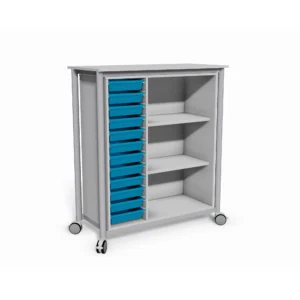
Open shelving is often used for books, trays, baskets and frequently accessed materials. Cupboards and enclosed units are better for resources that create visual clutter or need to be kept out of sight. Tray storage is especially popular because it gives every category of item a clear place while making resources easy to remove and return. Mobile trolleys are useful where classrooms need flexibility or where the same materials are shared between departments or teaching spaces.
The choice depends on what the storage needs to achieve. Some units are primarily about visibility and access. Others are about security, neatness or mobility. The most effective classroom storage usually comes from understanding the room’s daily routines and then selecting a mix of storage types that support those routines.
Before buying new furniture, it helps to think carefully about what the classroom is actually storing. Many storage problems happen because schools start by looking at products rather than looking at the contents first. The better approach is to identify the resources, equipment and belongings that need a home, then work backwards to decide what kind of unit is best.
A classroom may need to store curriculum resources, consumables, personal belongings, technology, specialist equipment and display materials all at the same time. Some items are used every day and should be easy to reach. Others are used only occasionally and can be kept higher up or behind doors. Some need to be visible so children remember to use them. Others are best hidden to reduce distractions.
Storage needs also change according to age group and subject. An early years classroom tends to need highly accessible, lower-level furniture that supports self-selection and tidy-up routines. A secondary classroom might need more teacher-managed storage and more specialised solutions. Multi-use spaces have their own challenges, as storage may need to support several different users across the week.
That is why planning classroom storage is not just about volume. It is about accessibility, visibility, safety and day-to-day practicality.
Books and reading materials are among the most obvious storage demands in any classroom. Guided reading books, class novels, reference texts and library books can quickly become untidy if they do not have a dedicated place. Storage for books needs to make titles easy to see, easy to return and simple to maintain.
Student supplies create another constant demand. Pencils, scissors, rulers, glue sticks and exercise books are used every day, and without proper organisation they easily spread across desks and windowsills. Good classroom storage keeps these essentials close to hand without letting them take over the room.
Teaching resources often need more thoughtful organisation. Flashcards, maths manipulatives, phonics materials, worksheets, small group resources and practical teaching aids all need to be stored in ways that make them easy for staff to find quickly. If they are buried in mixed cupboards or stacked in unstable piles, valuable teaching time is lost.
Technology is now a major part of storage planning. Tablets, laptops, chargers, headphones and associated equipment need secure, organised spaces that protect devices when not in use. In many schools, this also means storage that supports charging and movement between classrooms.
Art supplies bring their own challenges because they are varied in size and often messy. Paint, brushes, paper, card, clay tools and drying work all need space. PE equipment may also require classroom-adjacent storage in some settings, especially where indoor teaching spaces double up for intervention or activity work. Then there are student belongings such as bags, coats and lunch boxes, which can quickly create congestion if there is nowhere obvious for them to go.
The more clearly a school understands these categories, the easier it becomes to choose the right classroom storage solution.
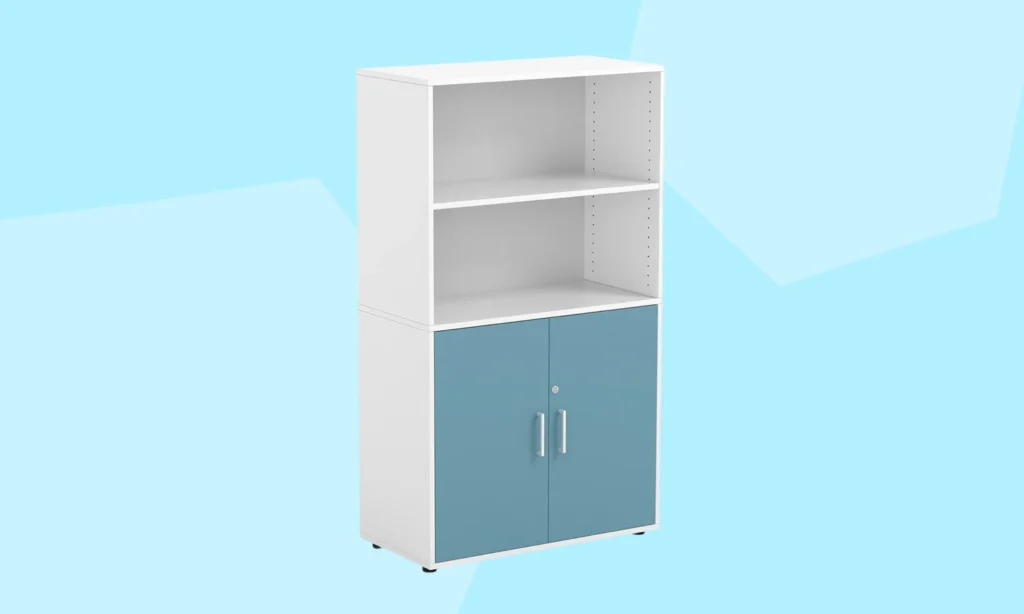
One of the most important choices in classroom storage is whether resources should be openly visible or tucked away behind doors.
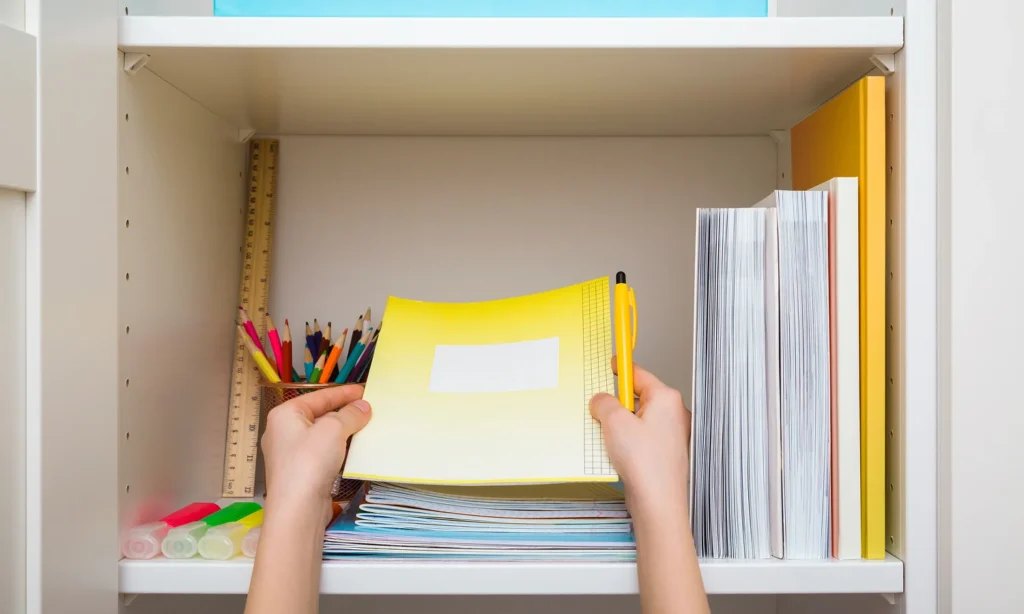
Open storage has the advantage of accessibility. It allows pupils and staff to see what is available at a glance, which can be especially helpful in younger classrooms and in settings where independence is encouraged. Open shelving works well for reading areas, labelled trays, baskets and display-led storage where visual cues are part of the learning environment. It can also make tidying up more intuitive because the destination for each item is obvious.
The drawback is that open storage contributes to the visual landscape of the room. If it is not kept organised, it can quickly make the classroom feel busy or chaotic. That is why open units usually work best when the contents are limited, clearly labelled and regularly maintained.
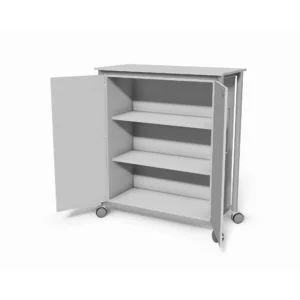
Closed storage offers a different benefit. It reduces visual clutter and creates a calmer look, particularly in classrooms where there are already lots of displays, resources and movement. Cupboards are especially useful for materials that are bulky, unattractive, occasionally used or not suitable for unsupervised access. They are also more secure for teacher resources, confidential materials or anything that pupils should not handle independently.
For many schools, the strongest approach is a combination of both. Open classroom storage can support access, independence and visibility for everyday items, while closed storage keeps the room feeling ordered and protects resources that do not need to be constantly on show.
Another major decision is whether storage should stay in one place or move when needed.
Fixed storage is often chosen where permanence and capacity matter most. Built-in or static units can anchor the layout of a classroom and make the best use of available walls and corners. They are especially useful for large volumes of materials, heavier equipment or classrooms with well-established zones. In a primary setting, fixed storage can help define areas for reading, maths, creative work or personal belongings. In specialist rooms, it can provide dependable storage that stays exactly where staff expect it to be.
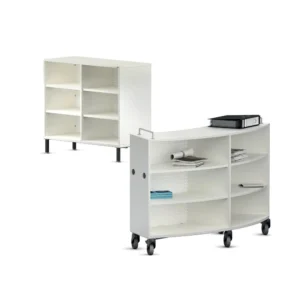
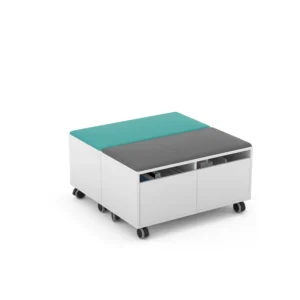
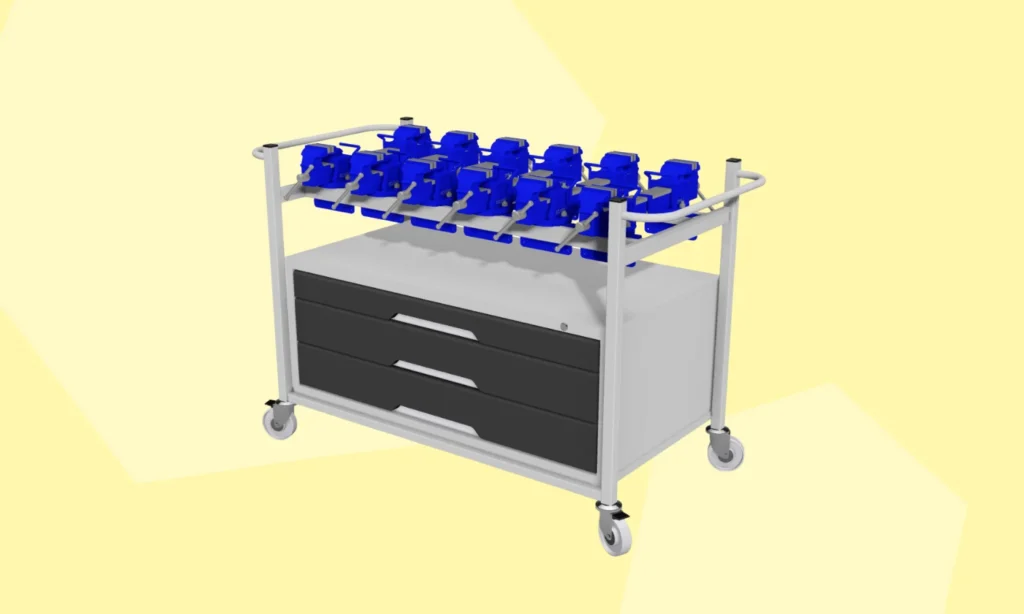
Mobile storage offers flexibility. Trolleys and wheeled units can be repositioned to support changing teaching styles, shared resources or multi-purpose classrooms. A trolley of art supplies can be brought to a group table, then moved away at the end of the session. A charging unit can serve one room in the morning and another in the afternoon. In schools where space must work hard, mobile classroom storage can make a big difference.
The choice between fixed and mobile storage depends on how static or flexible the room needs to be. Many schools benefit from using both. Fixed units provide the backbone of the room, while mobile units add versatility where teaching demands change from lesson to lesson.
Cubby storage is one of the most recognisable forms of classroom storage, particularly in early years and primary settings. Its appeal lies in simplicity. Each child, category or activity can have its own clearly defined compartment, which makes it easy to assign ownership and maintain routines. Cubbies work especially well for personal items, reading folders, book bags, lunch boxes and classroom resources that need to remain visible and easy to access.
In younger classrooms, cubby storage supports independence because pupils can quickly identify their own space and return items without needing adult help. In shared learning areas, it can also prevent clutter from spreading across tables and floors. The best cubby systems are sized appropriately for the intended items and positioned where children can reach them safely and comfortably.
Cubby storage is most effective when it is labelled clearly and integrated into classroom habits. Without those routines, even good furniture can become a dumping ground. But when used well, cubbies provide one of the clearest, most pupil-friendly forms of classroom organisation.
Books need storage that respects how they are used. A pile of books on a shelf may technically count as storage, but it rarely supports easy browsing, neat return or visual appeal. Good classroom storage for books should help pupils see titles or covers, keep books upright or neatly separated, and make the reading area feel inviting rather than overfilled.
Front-facing display units are often useful for younger readers because covers are easier to recognise than spines. For older pupils, shelving may be more efficient if books are organised by genre, level or topic. In class libraries or corridor reading zones, a combination of display and spine-out shelving can work particularly well. The aim is not just to store books safely, but to encourage their use.
Book storage should also be robust enough to cope with regular handling and constant re-shelving. Schools often underestimate how quickly an appealing reading corner can become untidy without the right unit. Strong, accessible book storage helps preserve the look of the area and supports reading culture across the school.
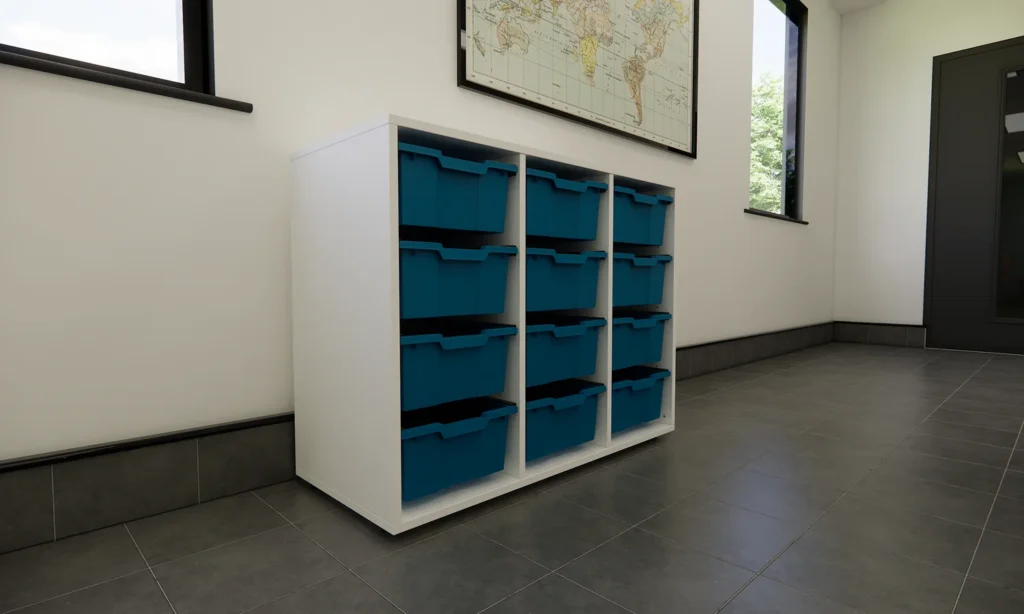
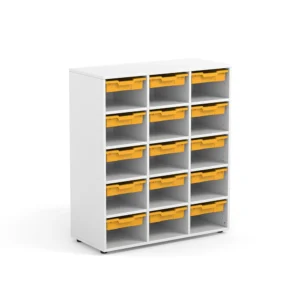
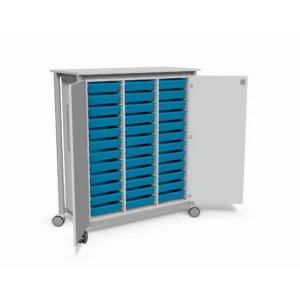
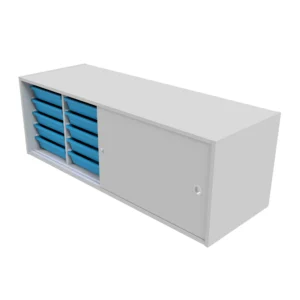
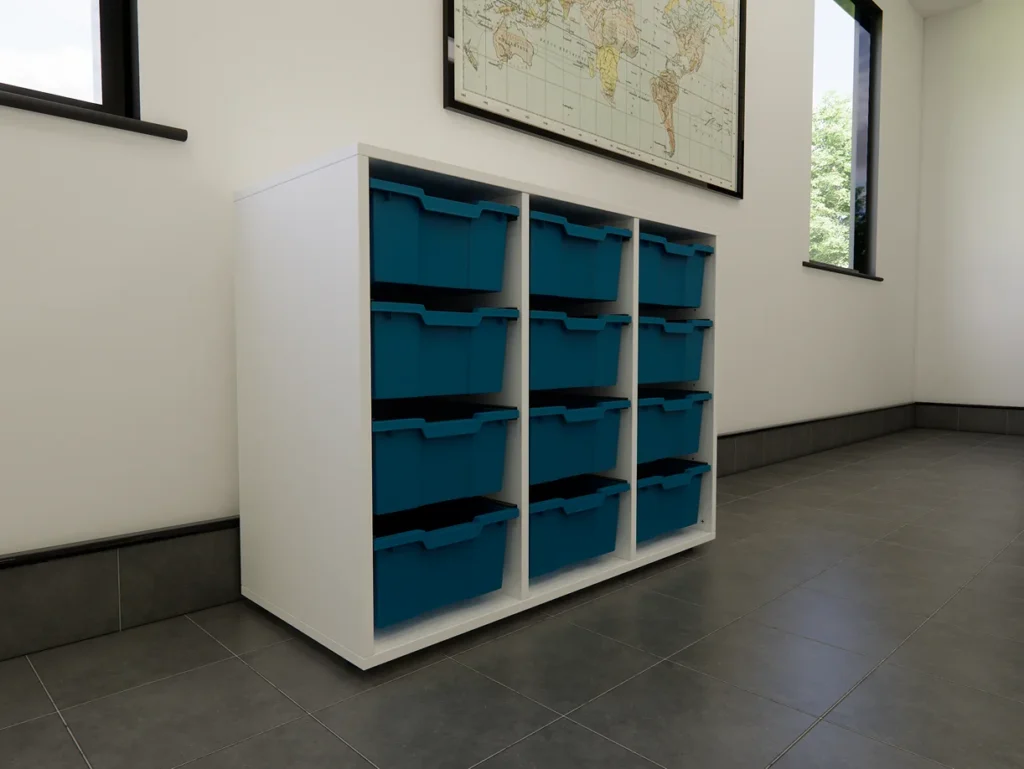
Tray storage remains one of the most practical and versatile classroom storage solutions available. It works because it breaks storage into manageable units. Instead of one large cupboard where resources get mixed together, trays create separate spaces for subjects, groups, activities or types of equipment. This makes them easy to label, easy to remove and easy to reorganise.
In many classrooms, tray units support both staff and pupils. Teachers can prepare resources in advance and hand out trays as needed, while pupils can independently collect and return what they need. Trays are particularly useful for stationery, small manipulatives, worksheets, phonics resources, art materials and ongoing project work.
A major advantage of tray storage is flexibility. As classroom needs change, trays can be relabelled and repurposed without replacing the furniture itself. This gives the unit a long working life and makes it suitable for evolving curriculum needs. For busy schools, that adaptability is often one of the strongest reasons to choose tray-based classroom storage.
Drawer units bring a different kind of organisation to the classroom. They are especially useful where visibility matters less than separation and containment. Drawers allow schools to store smaller items neatly without exposing them to dust, visual clutter or frequent handling. They can be useful for teacher resources, stationery reserves, paperwork, assessment materials and specialist equipment.
The key advantage of drawers is that they allow storage to be structured in a more controlled way. A well-designed drawer unit can keep valuable or frequently mixed items separate while still allowing relatively quick access. In shared spaces, this can help staff avoid the frustration of resources drifting into the wrong places.
Drawers are often most effective when combined with other forms of classroom storage. They may not be the best option for every pupil-facing item, but they are extremely useful behind the scenes and in teacher-managed zones where neatness and categorisation are priorities.
Racks and multi-purpose trolleys are valuable wherever resources need to move or where storage must adapt to the activity taking place. A trolley can turn a static store of resources into a working teaching station. Art materials, science equipment, intervention resources or shared devices can all be organised in one place and brought directly to where they are needed.
Racks are often used for drying artwork, storing large sheets of paper, holding boards or managing specialist materials. Trolleys, meanwhile, are particularly effective in flexible classrooms, specialist departments and schools where rooms are used by multiple staff or year groups.
What makes these options so useful is their responsiveness. They support the way schools really work, especially when space is at a premium and resources cannot simply live where they are used. Good mobile classroom storage should be easy to manoeuvre, robust enough for repeated use, and sized to pass through doors and around furniture comfortably.
Technology requires a different standard of classroom storage from most other resources. Devices are valuable, vulnerable and often used across multiple classes. Storage therefore needs to protect equipment, keep it organised and, in many cases, support charging at the same time.
ICT storage should make it easy to account for tablets, laptops and accessories without leaving cables trailing or devices stacked unsafely. In schools where equipment is shared, portability may also matter. A well-designed ICT trolley or cabinet can help staff deploy devices efficiently while reducing the risks of damage, tangles and misplaced chargers.
Art teaching generates a broad mix of resources, from paint bottles and brushes to sketchbooks, card and drying work. Storage needs to cope with wet and dry materials, varying sizes of resource and the reality that art spaces can become busy very quickly.
Effective art classroom storage makes materials visible enough to use, but contained enough to keep the room manageable. Flat storage can help protect paper and boards, while trolleys and tray units allow materials to move between teaching areas. The more practical and durable the storage, the easier it becomes for staff to maintain a creative space without letting it descend into clutter.
Design and technology spaces have their own storage challenges because resources are often heavier, more awkwardly shaped and potentially hazardous if left unsecured. DT storage needs to support both efficiency and safety. Tools, components, boards and project materials must be organised in ways that make them easy to issue and return while keeping the room clear and well managed.
Because DT often involves practical making, storage should sit close to work areas without obstructing movement. Durable construction matters here, as the furniture itself must withstand a more demanding environment than a standard classroom.
Tool and equipment organisation is a specialised branch of classroom storage, but an important one. Poorly stored tools waste time and increase the risk of loss or misuse. Good organisation makes it obvious what is available, where it belongs and whether anything is missing.
This is particularly useful in practical subjects, but the principle applies more widely too. Whether the equipment is glue guns, measuring tools, sports kit or intervention resources, the more visible and logical the organisation, the easier it is to maintain standards over time.
Library and reading-area storage should balance capacity with accessibility. A crowded library can feel uninviting, but a well-organised one encourages browsing and independent choice. Storage should help users navigate by age, topic or genre without making shelves feel overloaded.
In classroom libraries, lower units may be needed for younger pupils, while larger schools may combine shelving, display units and returns points to keep the collection tidy. Good library classroom storage helps protect books, supports reading habits and makes the space feel purposeful rather than purely functional.
Choosing the right classroom storage means thinking beyond appearance. A unit may look attractive in a catalogue, but if it does not fit the room, suit the resources or support the daily routine of the class, it is unlikely to work well in practice. The best choices come from matching the storage to the demands of the space.
The first factor is how the classroom operates. Does the teacher want pupils to access resources independently, or is the room more teacher-directed? Are resources used all day, every day, or only occasionally? Is the room shared by multiple classes? Questions like these shape whether storage should be open or closed, fixed or mobile, low-level or tall.
Another important factor is who will use the storage most. Younger pupils need highly accessible furniture with obvious organisation. Older pupils may need less visible, more subject-specific solutions. Staff also need storage that helps them set up, teach and tidy away efficiently. The most successful classroom storage supports both pupils and teachers rather than favouring one at the expense of the other.
Storage should improve a room, not overwhelm it. That means considering footprint, wall space, circulation routes and how close units can sit to doors, windows or teaching walls. A large unit may provide plenty of capacity but still be the wrong choice if it blocks sightlines or makes movement awkward.
Thinking vertically can help. In some rooms, higher storage increases capacity without taking up too much floor space. In others, lower units are more suitable because they preserve visibility and create flexible edges around the room. The right answer depends on the shape of the classroom and how it is used.
The contents should always drive the solution. Small consumables may suit trays or drawers. Oversized books or boards may need racks. Daily stationery needs a very different approach from seasonal display materials or expensive equipment. By mapping storage to resource type, schools are far more likely to choose classroom storage that remains useful over time.
Day-to-day supplies are one of the best tests of whether storage really works. If basic classroom items are hard to reach, constantly missing or spread across multiple places, the system is probably not supporting the room effectively. Good storage for supplies keeps essentials close to where they are used and makes restocking straightforward.
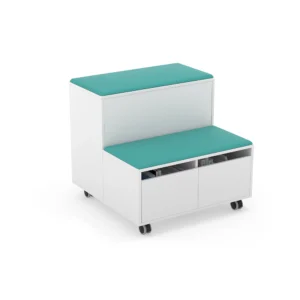
In some schools, furniture has to do more than one job. A storage unit may also define a learning zone, support display, or sit beneath a worktop. Multi-functional storage can be especially valuable where space is tight because it helps each item of furniture earn its place in the room.
Modular systems are useful because they allow schools to build storage around their needs rather than forcing the room to fit a fixed format. As classes, subjects and teaching approaches change, modular classroom storage can often be reconfigured more easily than one-piece solutions. That flexibility can add significant long-term value.
The cost of classroom storage varies widely depending on the size of the unit, the materials used, whether it is mobile or static, and whether it includes specialist features such as trays, locks or charging capability. A simple open shelf unit is obviously very different from a heavy-duty mobile device trolley or a secure cupboard for specialist equipment.
For schools, the key is not only to ask what a unit costs to buy, but what it costs to own. A cheaper unit that becomes damaged quickly or fails to meet the needs of the room may prove more expensive over time than a stronger, better-designed option.
Value and price are not the same thing. A good classroom storage solution earns its value by improving organisation, protecting resources and reducing the everyday friction that comes from clutter and poor access. If a unit saves staff time, protects equipment, lasts for years and continues to suit the room as needs evolve, that value can far outweigh a slightly higher purchase price.
Product Lifecycle is imperative, because storage is heavily used furniture. Doors are opened repeatedly, trays are removed and replaced, books are shoved back in, trolleys are moved and surfaces are wiped down every day. The construction quality therefore has a direct effect on how the furniture looks and performs after a few terms, not just on delivery day.
Schools should look for classroom storage that feels durable enough for genuine educational use. Strong frames, quality materials, reliable castors where relevant, and robust handles or fittings all contribute to longer service life. A storage solution that lasts well is often the most economical choice in the long run.
Buying the right storage is only part of the process. Implementation matters just as much. A well-chosen unit can still underperform if it is placed badly, overloaded or introduced without considering how it will actually be used.
The starting point is accurate measurement. Schools should calculate available width, depth and height and then think carefully about how the room functions around that footprint. It is important to maintain comfortable circulation routes, especially in busy classrooms where pupils move frequently between tables, carpet areas and teaching zones.
Height restrictions also matter. Tall storage may increase capacity, but it can disrupt sightlines if placed in the wrong part of the room. In classrooms where visibility is important, lower units are often better near central spaces, with taller storage kept to the perimeter. If mobile units or trolleys are part of the plan, access requirements need to be checked too. Door clearances, turning space and corridor widths all affect how practical mobile classroom storage will be in daily use.
Safety is a crucial part of storage planning. Tall units may need anti-tip measures, especially where younger pupils are present or where a unit could become unstable if drawers or doors are opened unevenly. Weight distribution matters as well. Heavier items should usually be stored lower down, with lighter resources higher up, to improve stability and make handling safer.
Where dangerous materials or specialist equipment are involved, security becomes essential. This is particularly relevant in science and DT environments, where some items should be stored behind secure doors and accessible only to staff. Good classroom storage should support not just tidiness, but safe school operation. Lockable under bench cupboards and mobile trolleys are a fantastic solution to this problem.
Effective school storage is about much more than finding somewhere to put things. It shapes how the room feels, how smoothly lessons run and how confidently pupils and staff can use the space. From books and stationery to technology, art materials and specialist equipment, every classroom contains resources that need thoughtful organisation. The right combination of open and closed storage, fixed and mobile units, and general and specialist solutions can make a noticeable difference to the daily life of the classroom.
The most successful storage plans start with the real needs of the room. Before choosing products, it is worth looking closely at what needs to be stored, who needs access to it, how often it is used and what the room can realistically accommodate. That kind of practical review usually leads to better decisions than choosing furniture based on appearance alone.
Good classroom storage supports learning quietly but powerfully. It protects resources, reduces clutter, improves access and helps schools create calmer, more purposeful teaching spaces. Whether the need is for cubbies, trays, trolleys, cupboards or specialist storage, the best solution is one that fits the room, supports the routines of the class and continues to work well over time.