The Inclusive Mainstream Fund: A Guide for Schools and Teachers
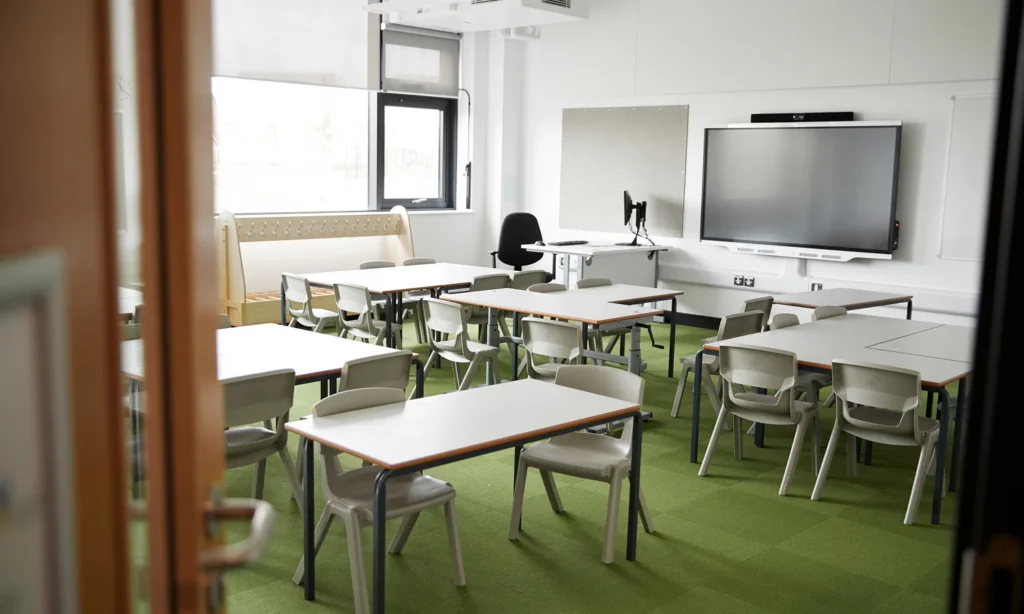
Choosing the right school chairs is one of the most overlooked but important decisions a school can make. Chairs are used every day, often for hours at a time, by pupils who are still growing and developing. The wrong chair can lead to discomfort, poor posture, fidgeting and a classroom that never quite feels settled. The right chair supports focus, helps pupils sit well, contributes to a calmer learning environment and stands up to the demands of busy school life.
This matters in every phase of education. In primary schools, chairs need to be safe, durable and correctly sized for younger children who are learning how to sit, work and move independently within the classroom. In secondary schools, chairs need to cope with heavier daily use, longer periods of seated work and a wider range of classroom layouts. In specialist spaces such as science labs, ICT suites or flexible learning rooms, the demands can be different again.
The good news is that there is a wide range of school chairs available to suit different age groups, subjects and teaching styles. Some are designed for general classroom use, some prioritise stacking and storage, some are height-adjustable, and others are built specifically for teachers or for practical spaces like laboratories. The challenge is not a lack of choice. It is knowing which features really matter and which type of chair is right for your setting.
This guide covers the key types of school chairs used in UK schools, the safety and ergonomic features worth paying attention to, and the size guidance schools need in order to choose confidently. It also looks at classroom layout, stacking versus fixed seating, mobile chairs, adjustable options and budget considerations, so that schools can make better long-term decisions rather than simply picking the cheapest option on the page.
A school chair may seem like a simple item of furniture, but it has a direct effect on the way a classroom functions. Seating influences posture, comfort and concentration, but it also affects classroom organisation, movement, cleaning and storage. When chairs are the wrong size or poorly suited to the users, pupils tend to shift awkwardly, lean too far over desks or struggle to sit comfortably for long periods. Over time, this can affect focus and make the working environment feel less settled.
Chair selection matters for practical reasons too. Schools need furniture that can cope with constant movement, stacking, cleaning and repeated daily use by large numbers of pupils. A chair that looks suitable in a brochure may perform very differently after a year of real classroom use. That is why durability, stability and suitability for the age group are just as important as appearance.
In UK schools, sizing is guided by BS EN 1729, the standard used for chairs and tables in educational institutions. That standard sets out functional dimensions and safety requirements so that furniture is matched more appropriately to pupil stature and use. It is supported in procurement guidance and sizing charts used across the education sector.
This guide is designed to help schools compare the main types of school chairs, understand what features matter most, and choose chairs that are appropriate for pupil age, classroom purpose and long-term value. It looks at general classroom chairs, ergonomic models, stacking chairs, adjustable-height options, science stools and teacher seating. It also explains how to use chair height guidance properly, including the internationally recognised Sizemark system within BS EN 1729.
There is no single school chair that works for every pupil and every room. Primary classrooms often need lighter, lower chairs that are easy to move and simple to clean. Secondary environments usually need more robust seating, often in larger sizes. Some schools benefit from stacking chairs that can be cleared quickly or stored efficiently. Others need ergonomic designs for longer seated tasks, or adjustable chairs for mixed-age groups and more specialist needs.
Specialist spaces can call for different seating again. Science rooms often use stools rather than standard chairs. ICT spaces may benefit from mobile seating in some layouts, while teacher seating needs a different balance of support, movement and day-long comfort. Nortek’s current education seating range reflects this variety, with classroom chairs and stools designed for different learning environments, plus broader ranges for primary, secondary and teacher furniture.
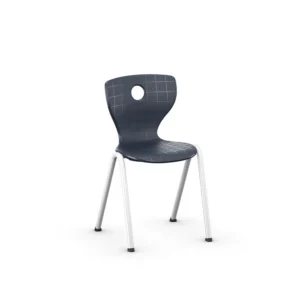
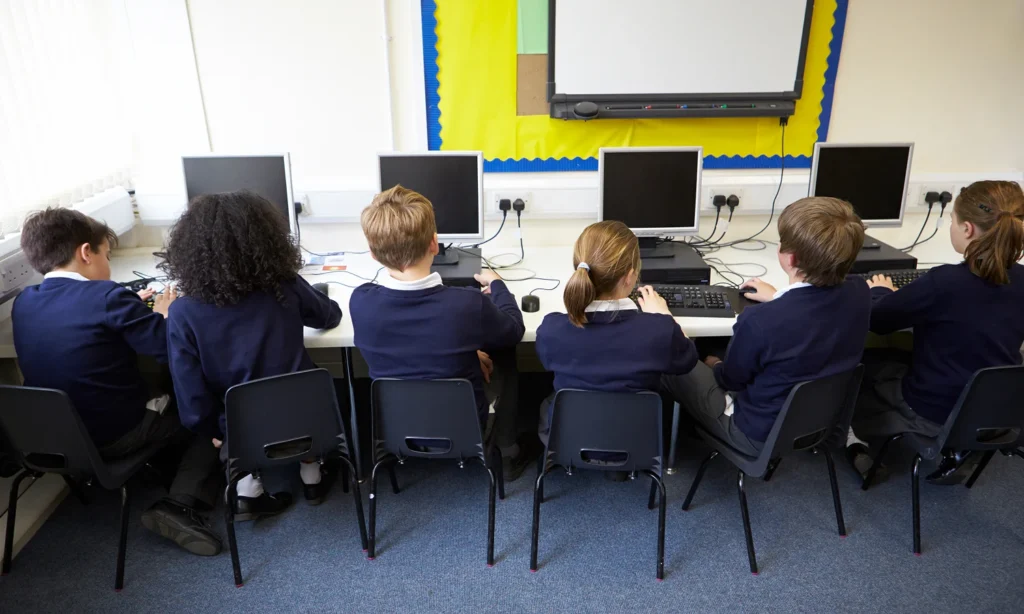
Primary school chairs need to do a lot at once. They must be correctly sized for younger children, light enough to manage, strong enough for everyday use and safe in busy classroom environments where movement is constant. In many primary classrooms, chairs are moved several times a day for carpet sessions, group work, practical activities and tidying routines, so ease of handling matters almost as much as durability.
The best use case for primary school chairs is general classroom learning, especially where children need seating that supports writing, drawing, group work and short transitions between activities. In early years and Key Stage 1, the chair needs to support posture without feeling restrictive. In Key Stage 2, the same principles apply, but the furniture often needs to feel slightly more grown-up while still remaining practical and hard-wearing.
The advantages of primary school chairs are clear. When they are the right size and shape, they help children sit more comfortably, make classroom routines easier and support independence. They are usually straightforward to clean and, in a good education-grade specification, are built to cope with knocks, stacking and repeated use. The downside is that primary chairs can quickly become unsuitable if sizing is treated too broadly. A chair that works for one year group may be uncomfortable or impractical for another, which is why correct size selection matters so much. Nortek’s primary school furniture range emphasises safe, durable classroom environments for younger learners, while its broader seating category includes education seating intended for heavy use.

Ergonomic school chairs are designed with posture and seated comfort more deliberately in mind. They typically offer a more supportive seat shape, considered backrest design and dimensions intended to help pupils sit well during longer periods of learning. In practice, “ergonomic” in schools does not mean the same thing as high-end office seating. It means chairs that are shaped and proportioned to encourage better sitting positions and reduce unnecessary strain.
These chairs are often most useful where pupils spend long periods working at desks, particularly in secondary environments or in classrooms where writing, reading and screen-based work dominate. They can also be helpful in settings where schools want to improve comfort and concentration without moving to a more complex adjustable solution.
The main benefit of ergonomic seating is that it supports pupils more effectively through the school day. Better seat shape and back support can improve comfort, and comfortable pupils are often better able to stay focused. The limitation is that ergonomic designs are only effective when they are the right size. Even a well-designed chair can be uncomfortable if it is too high, too low or mismatched to the desk. Nortek’s seating range places strong emphasis on posture, comfort and learning support in educational settings, which aligns closely with the case for ergonomic classroom seating.
Stacking school chairs are chosen primarily for flexibility and space efficiency. They can be stored quickly, moved out of the way for cleaning or events, and used in multipurpose rooms where layouts need to change often. In schools, that makes them particularly useful not only in classrooms but also in dining spaces, halls, meeting areas, exam settings and overflow teaching rooms.
Their best use case is any environment where chairs need to be reconfigured regularly or where spare seating needs to be stored compactly. In schools with limited storage space, stackability can make a major difference. It also helps site teams and staff clear rooms more efficiently for performances, assemblies or parent events.
The biggest advantage is obvious: stacking chairs save space and add flexibility. They also make maintenance easier because floors can be cleared more quickly. However, the best stacking chairs still need to feel stable and comfortable when in use. Schools should be careful not to prioritise storage efficiency so heavily that they compromise seating quality. Nortek’s seating range includes stackable classroom options, and current product pages highlight stackability and education-focused durability on selected models.

Adjustable-height school chairs offer a more flexible approach where one size may not suit every user or where spaces are used by mixed groups. In education, they are often relevant in specialist rooms, multi-use settings and some SEN applications where a more individual fit can make a meaningful difference.
Their best use case is a classroom or learning environment where users vary significantly in stature, where furniture may need to adapt across different age groups, or where the school wants to support pupils with more specific seating needs. They can also be valuable in practical environments where the height relationship between chair and work surface needs to be more finely controlled.
The advantage of adjustable seating is adaptability. A school can get more versatility from a smaller number of chairs, and the furniture can be tailored more closely to the user. The drawback is usually cost and complexity. Adjustable chairs are often more expensive than fixed-height models, and they need to be set correctly to provide the intended benefit. In some mainstream classrooms, that extra flexibility may be unnecessary if the school already sizes fixed chairs properly using the BS EN 1729 system.
Science stools sit slightly apart from standard school chairs because they are designed for a different type of classroom activity. In laboratories and science rooms, seating often needs to work with higher benches, practical demonstrations and more frequent transitions between sitting, standing and observing.
Their best use case is clearly the science lab or any space with elevated work surfaces. In these environments, stools can give pupils the right working height and greater freedom of movement than a full-backed classroom chair. They also tend to suit more compact layouts around benches.
The key benefits are practicality, compatibility with science workstations and ease of movement. Stools can also be simpler to clean and store under benches. Their limitations are also clear. They generally offer less back support than full classroom chairs and are not ideal for long periods of written work. That means they work best in specialist settings rather than as a whole-school solution. Nortek’s current education seating range includes both chairs and stools aimed at specialist teaching environments.
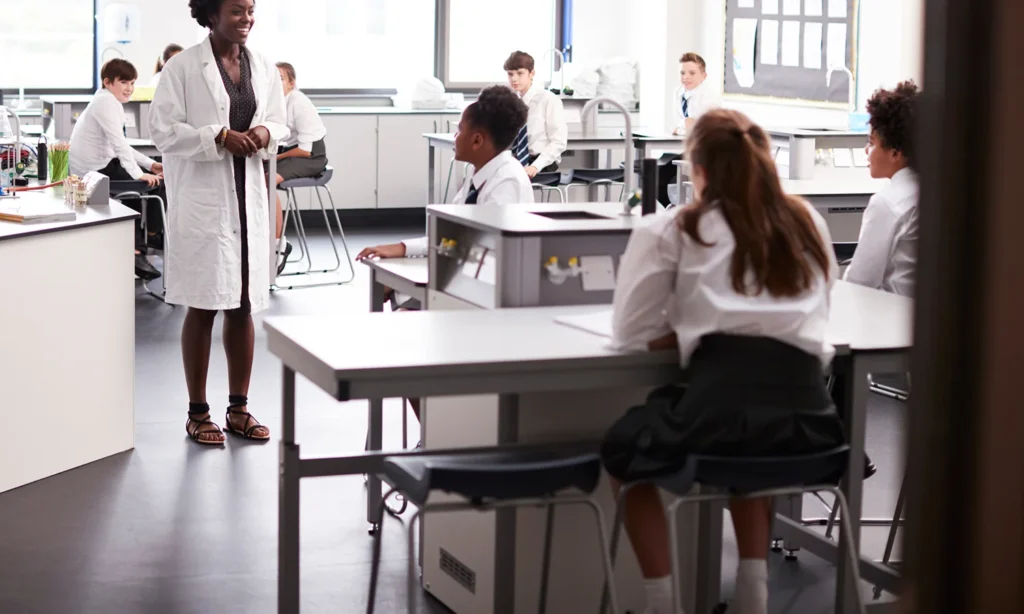
Teacher’s chairs have different demands from pupil seating. A teacher may sit for planning, marking, one-to-one work, computer use and administrative tasks across the day, often moving between sitting and standing frequently. That means teacher seating needs a better balance of support, mobility and day-long comfort than a standard pupil chair.
The best use case is obvious: staff desks, prep areas, offices and front-of-class teaching positions where the chair is used repeatedly throughout the day. In some classrooms, mobility is especially important, while in others ergonomic support matters more.
The advantages of teacher chairs are improved comfort, better support for extended seated work and a design better suited to adult use. The drawback is that these chairs take up more space and can involve more moving parts, which makes quality important. Nortek’s teacher furniture range includes dedicated furniture for staff workspaces, and its broader seating offer reflects the need for durable, supportive educational seating.
Safety should always come first when selecting school chairs. In the UK, the key dimensional and safety benchmark for educational seating is BS EN 1729, which covers functional dimensions for chairs and tables used in educational institutions, alongside safety requirements and test methods. This standard is widely referenced in education procurement and sizing guidance because it helps schools match seating more appropriately to pupil size and classroom use.
Fire safety also matters, particularly where chairs include upholstered components or where staff are purchasing seating for spaces that are not simple hard-plastic classroom environments. UK government guidance on furniture fire safety remains relevant, and schools should ensure upholstered products are specified appropriately and sourced from reputable suppliers that understand the applicable requirements.
Anti-tip stability is another practical consideration. A good classroom chair should remain stable during normal school use, including the small movements and leaning that inevitably happen during lessons. Weight capacity should also be suitable for the intended users, especially in secondary or adult-learning environments. In short, schools should look for seating that is not only comfortable and attractive, but demonstrably suitable for educational use under recognised standards.
Comfort is not a luxury in classroom seating. It plays a direct role in how well pupils can concentrate. If a chair is too narrow, too deep, too upright or the wrong height, pupils are more likely to fidget, perch or slump. Over time, that can affect both posture and attention.
The main ergonomic points to consider are seat depth, seat width and back support. The seat should allow the pupil to sit comfortably without too much pressure behind the knees, while the backrest should offer enough support to encourage an upright but natural sitting position. Correct chair size is fundamental here. BS EN 1729 is built around the relationship between pupil stature and furniture dimensions for exactly this reason.
If your school is reviewing seating across several classrooms or age groups, it is worth approaching the decision strategically rather than replacing chairs room by room without a wider plan. A free consultation or room-planning discussion can help identify the right sizes, formats and layouts before purchasing.
Materials make a huge difference to how school chairs perform over time. Most classroom chairs use some combination of plastic, wood and metal. Plastic seats are popular because they are easy to clean, durable and available in a wide range of colours. Wooden chairs can offer a warmer aesthetic and are sometimes chosen for particular environments, though they may require different maintenance considerations. Metal frames are commonly used for strength and stability, especially in stackable or heavily used models.
In a busy school, the expected lifespan of a good-quality chair is often around five to ten years, depending on usage, cleaning, movement and storage. Lower-quality seating may not come close to that. Schools should therefore think about maintenance as part of the buying decision. Easy-clean surfaces, robust frame finishes and replaceable glides or castors can all help extend service life and protect floors at the same time. Nortek positions its education seating around durability and heavy-use educational environments, which is exactly what schools should be looking for in this category.
Choosing school chairs by age is about more than broad year-group assumptions. Pupils can vary significantly in height even within the same class, which is why educational furniture uses the Sizemark approach linked to BS EN 1729 rather than relying on age labels alone. The aim is to match the pupil to the chair and desk so that the working position feels natural and supportive.
The most practical way to choose school chair sizes is to use the BS EN 1729 Sizemark framework (as provided by the government) and check it against the stature of the pupils using the room. Schools can do this by measuring pupil height, checking the intended desk height and then matching both to the appropriate chair size. This matters because the chair and desk must work together, not as separate purchases. If the seat is the right size but the desk is too high, pupils will still end up working uncomfortably. Procurement and education-sector guidance continue to reference BS EN 1729 for this reason.
As a simple rule, when a pupil is seated their feet should rest comfortably, their thighs should be supported without pressure behind the knees, and their forearms should meet the desk without lifting the shoulders excessively. That relationship is exactly what the Sizemark system is designed to support.
| Age | Chair Height (mm) | Seat Depth (mm) | Seat Width (mm) | Typical Sizemark |
|---|---|---|---|---|
| 5–6 years | 260 | 240 | 260 | 1 |
| 7-8 years | 300 | 270 | 290 | 2 |
| 9-10 years | 350 | 300 | 320 | 3 |
| 11-12 years | 380 | 330 | 350 | 4 |
| 13-14 years | 430 | 360 | 380 | 5 |
| 15-16 years | 460 | 390 | 400 | 6 |
| 16+ years | 510 | 420 | 430 | 7 |
These figures provide a practical guide for choosing school chairs, but they should always be checked against actual pupil stature and the corresponding desk height. BS EN 1729 sizing charts are widely used across the sector, and the most common school chair sizes run from Sizemark 1 through to Sizemark 6, with Sizemark 7 used more often for older students and adult settings.
Primary school pupils aged 5 to 11 will usually fall into the lower Sizemarks, depending on stature. In practical terms, schools should focus on durability, smooth edges, easy cleaning and stackability where needed, as well as correct height. Nortek’s primary school furniture range is aimed at active, safe and engaging learning spaces for younger pupils, which fits these requirements closely.
Secondary school pupils aged 11 to 18 generally require larger sizes and often more robust construction because the furniture sees heavier use and supports longer seated tasks. Here, sturdiness, stability and the relationship between chair and desk height become particularly important. Nortek’s current secondary furniture range emphasises durability, flexibility and functionality for older learners.
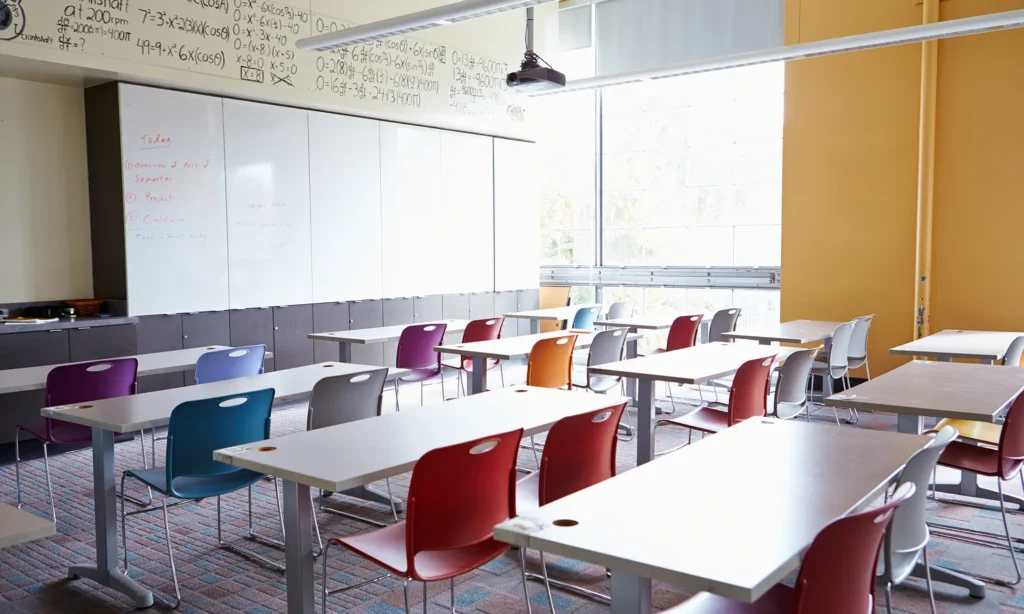
Selecting the right school chairs starts with the educational setting rather than the catalogue page. A primary classroom with lots of movement and practical activity needs something different from a secondary maths room, a science lab or an ICT suite. Schools should think carefully about how long pupils are seated, how often chairs are moved, whether rooms need to be cleared or reconfigured, and whether the seating needs to support independent work, group work or specialist tasks.
Matching the chair to the user is central to the decision. The pupil’s age, size and type of classroom activity should shape the specification. A good chair is not simply one that looks durable. It is one that feels right in use, suits the desk and supports the daily pattern of learning in that room.
The choice between stacking and fixed school chairs often comes down to how flexible the classroom or wider school environment needs to be. Stacking chairs are especially useful where rooms host multiple activities, where cleaning access is important or where spare seating must be stored compactly. They can save valuable space and make room changes faster and easier.
Fixed-format chairs, or chairs that are rarely stacked, may be preferable in rooms with a stable layout where day-to-day storage is less important and maximum robustness is the priority. In cost terms, stacking chairs can sometimes offer excellent value because of their versatility, but the real decision should be based on use. If a room never needs chairs moved or stored, stackability may not need to be the deciding feature.
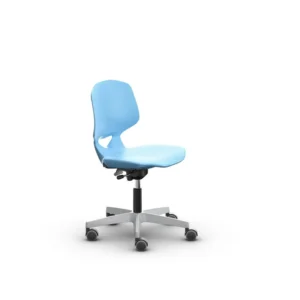
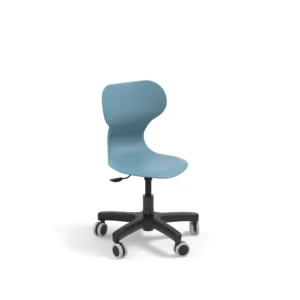
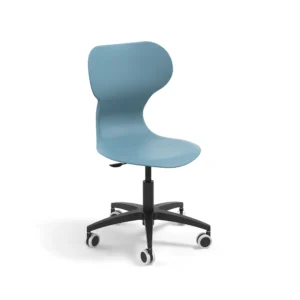
Mobile school chairs with castors can make sense in certain environments, but they are not right for every classroom. They are most useful in ICT suites, seminar-style spaces, sixth form areas and flexible learning environments where movement between stations or collaborative layouts is common. In these settings, mobility can support more dynamic teaching and easier transitions.
The castors themselves matter. Schools should look for wheels suited to the floor type and, where appropriate, options that protect flooring and provide controlled movement. In general classrooms for younger pupils, fully mobile chairs are often less necessary and can even be less practical than stable, easy-lift seating. The question is not whether wheels are modern or appealing, but whether they improve the way the room actually works.
Adjustable-height school chairs can be a strong option for mixed-age groups, intervention spaces and some SEN settings. Their main benefit is flexibility. Instead of trying to make one fixed size work for everyone, the school can adapt the seating to the user.
This can be particularly valuable where pupils need a more individual fit or where spaces serve multiple classes. However, the benefit depends on correct adjustment and good management. In many mainstream classrooms, a well-planned set of fixed-height chairs chosen using BS EN 1729 may still be the simpler and more reliable solution. Adjustable options are best seen as a targeted tool rather than a universal replacement.
Budget is always part of the conversation when buying school chairs, but the cheapest option is not always the most economical one. A chair that cracks, becomes unstable or looks tired after a short period can end up costing more through early replacement, maintenance issues and disruption to classrooms.
Prices vary widely depending on the type of chair, the materials used, whether the model stacks, whether it has adjustable features, and whether it is intended for pupils or staff. A basic classroom chair will usually cost significantly less than a specialist stool or an adjustable teacher chair, but that does not mean the cheaper product offers better value in the context where it is being used.
Looking at cost per student can be a more useful way to think about spending. If a chair lasts seven or eight years of daily use and supports the classroom properly throughout that time, the annual cost per pupil may be very reasonable. Schools making larger purchases often benefit from calculating the total spend across a room or year group, then comparing that against expected lifespan rather than headline unit cost alone.
Bulk ordering may reduce the cost per chair, depending on supplier terms and the scale of the project. For schools replacing seating across multiple rooms or phases, it is often worth discussing the wider project rather than placing small, isolated orders. This can also help ensure that sizing, colour choices and room layouts are consistent across the site.
Warranty is an important part of value. It tells you something about the manufacturer’s confidence in the product and gives schools reassurance that the seating is designed for educational use rather than light domestic use. It is also worth checking what the warranty actually covers, whether replacement parts are available and whether the supplier offers support for larger furniture projects. All Mirplay furniture is supported by a comprehensive warranty, while VS Furniture holds an industry leading warranty backed up by fantastic aftersales support. Replacement parts are widely available with both brands in case something fails.
Choosing the right school chairs is about much more than filling a classroom with somewhere to sit. Good seating supports posture, comfort and concentration, helps the classroom function more smoothly and stands up to the realities of daily school life. The most effective choice depends on the age of the pupils, the type of learning taking place, the relationship between chair and desk height, and the practical needs of the room.
Quality matters because school furniture works hard. Chairs are moved, stacked, wiped down and used constantly, often for years. A better chair is not simply one that lasts longer, although that matters. It is also one that supports pupils properly, suits the space and reduces the small daily frustrations that come from furniture that is the wrong fit.
Request a free quote for school chairs and take the next step towards a better learning environment